Choosing the wrong box can ruin your brand's luxury feel and damage your product. The options are confusing, and a bad choice is costly. Let's find the right material together.
The "best" cardboard for a perfume box is a strategic choice, not a single material. For high-end brands, thick rigid board is essential for structure and a premium feel. For more accessible price points, a high-quality folding carton like SBS offers excellent printability and cost-effectiveness.

I get this question all the time from clients. They want to know the "best" material. But after manufacturing packaging for over a decade, I've learned that's the wrong question. The real question is, "What material will achieve my specific goals?" We need to shift from thinking about materials first to thinking about our brand, budget, and customer first. Let's break down how to make the right choice for your unique perfume brand.
Should you prioritize material specs or your brand's goals?
You're buried in terms like GSM, caliper, and SBS. It is overwhelming, and you are not sure what really matters for your project. Let's simplify this and focus on what counts.
Stop comparing GSM numbers first. Instead, define your main goal. Is it a heavy, luxurious feel? Or is it maximum durability for shipping? Or maybe strict budget control? The best material is the one that achieves your business objective.
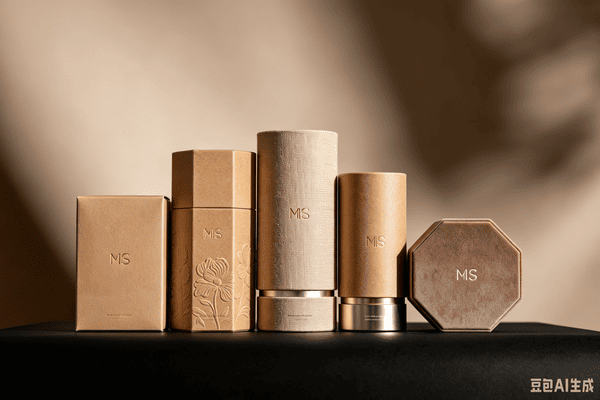
A common question from our clients in North America and Europe is, "What GSM is this box?" It is a good starting point, but it is only one part of the story. GSM, or grams per square meter, tells you the density of the paperboard1. A higher GSM often feels more substantial. But it does not tell you everything about strength or luxury. The real decision involves trade-offs between different properties that work together to create the final product. For example, a thick but low-density board might feel light and cheap, while a thinner, denser board can feel more premium2. It is about the complete package. We guide our clients to think about the end experience first, then we select the materials and specs to bring that experience to life.
From Specs to Experience
Think about what you want your customer to feel when they hold the box. Do you want it to feel heavy and important? Or sleek and modern? This feeling is created by a combination of material properties, not just one.
Translating Technical Terms into Brand Value
Let's translate some of these technical terms into what they actually mean for your brand's perception and your box's performance.
| Technical Spec | What It Really Means for Your Brand |
|---|---|
| GSM (Grams per Sq. Meter) | Perceived weight and substance. Higher GSM feels more substantial and valuable. |
| Caliper (Thickness) | Structural rigidity and protection. A thicker box feels more protective of the fragile bottle inside. |
| Material Type (e.g., SBS) | Print quality and finish. A smooth surface like Solid Bleached Sulfate (SBS) is great for vibrant colors and sharp details3. |
| Finish (e.g., Matte Lamination) | The tactile feel and luxury perception. A soft-touch matte finish feels premium and invites the customer to touch. |
How does your brand's price point change the perfect box choice?
A $30 perfume in a $200 box makes no sense for your budget. But a cheap-feeling box can destroy a luxury brand's image. Finding the right balance for your price point is crucial.
For a luxury perfume, a thick rigid board, often called grey board, is non-negotiable4. Its weight and solid structure communicate value instantly. For affordable scents, a well-printed folding carton provides a great look without the higher cost.

Over the years, we have helped thousands of brands find this balance. The choice of board is one of the clearest signals of where your product sits in the market. You cannot fake luxury with a flimsy box. Likewise, overspending on packaging for a mass-market product eats into your margins unnecessarily. The key is to match the packaging investment to the product's perceived value and your business model. We help our clients analyze this so they can put their money where it matters most to their specific customer.
The Luxury Standard: Rigid Boxes
For perfumes priced over $100, the unboxing experience is part of the product. This is where rigid boxes excel. They are constructed from thick, non-bending grey board, which is then wrapped in a paper of your choice. This process often involves more hand-finishing, which adds to the cost but also to the premium feel. These boxes are not designed to be thrown away. They become keepsake boxes, keeping your brand in the customer's home long after the perfume is gone5. They are also perfect for adding features like magnetic closures, ribbons, and custom foam or velvet inserts6.
The Smart Choice for Mass-Market: Folding Cartons
For affordable and mid-range perfumes, folding cartons are the industry standard. They are typically made from a material like Solid Bleached Sulfate (SBS)7. This material provides a brilliant white surface that is perfect for high-quality printing, showing off your branding with vibrant colors. These boxes are produced by machine at high speeds and are shipped flat to the factory where the perfume is bottled. This saves a huge amount on shipping and storage costs. While they do not have the weight of a rigid box, they can still feel premium with smart design and high-quality finishes like embossing or foil stamping8.
Does shipping to Europe versus America change your packaging choice?
Your beautiful perfume boxes arrive at their destination crushed and damaged. Customers are upset, and your brand reputation suffers online. This logistics nightmare could have been prevented with the right material choice.
Yes, your shipping destination absolutely changes your packaging needs. What we have learned after a decade of shipping to Europe and North America is that long-distance transit is tough on packages. We often recommend a higher caliper (thicker) board or reinforced box designs to prevent crushing when containers are stacked high on a cargo ship9.
A common mistake we see is clients focusing only on the unit cost of the box. They try to save a few cents per box by choosing a thinner material. But they do not factor in the potential cost of damage. A single pallet of destroyed goods can wipe out any savings you made on packaging10. We always have this conversation with our clients. We talk about the total cost of ownership. Sometimes, spending an extra 5% on a stronger box can save you thousands of dollars in lost product, freight claims, and damage to your brand's reputation.
The E-commerce Durability Test
If you sell online, your perfume box is not just a display piece; it is also the shipping box. It must survive a much rougher journey through multiple sorting centers and delivery trucks. It will be dropped, thrown, and stacked under other packages. For e-commerce, we focus on structural integrity above all else. This might mean using a thicker rigid board or designing a folding carton with double-wall construction11 to add strength where it is needed most.
Retail Shelf Appeal vs. Transit Toughness
A box designed for a physical retail shelf has a different job. It needs to look perfect under store lighting and attract a customer's eye from a distance. Here, the focus might be more on the print finish, the color vibrancy, and the feel of the material. However, even these boxes have to survive shipping from our factory to your distribution center, and then to the retail store. We help you find the right balance, ensuring your box is strong enough to arrive in perfect condition but also beautiful enough to make the sale.
How do you get the best packaging from your supplier?
You feel lost when talking to suppliers. They use jargon you do not understand, and you are not sure if you are getting the best solution. You need to take control of the conversation.
Stop asking, "What's your best cardboard?" Instead, ask a question that gives your supplier clear goals and constraints. For example: "For our luxury perfume shipping to the US, what options do you recommend to balance a premium feel with durability for e-commerce, within our budget of $X per unit?"
The goal is to move from a vague inquiry to a strategic brief. When you provide clear context, a good supplier can become a valuable partner. Instead of just giving you a price, they can offer solutions you may not have considered. They might suggest a different material that gives a similar feel for a lower cost, or a structural change that dramatically improves durability with a minimal price increase. When we receive a detailed request from a client, we know they are serious and have thought through their needs. It allows us to give them our best advice and a much more accurate and helpful quotation.
From Vague Inquiries to Strategic Briefs
A good brief empowers your supplier to do their best work for you. It shows them that you are a professional who understands that packaging is a strategic investment, not just a cost.
Your Pre-flight Checklist Before Talking to a Manufacturer
Use this table to frame your questions. It will help you get much better answers and, ultimately, a better product.
| Instead of Asking This... | Ask This Instead... | Why It's Better |
|---|---|---|
| What's your cheapest box? | What are the most cost-effective options for achieving a premium look on a large production run? | It focuses on achieving a specific value (premium look) within a cost-effective framework. |
| Do you have good quality cardboard? | We need a box to protect a 50ml glass bottle during international air freight. What structural solutions do you recommend? | It provides a specific, critical problem for the supplier to solve, leading to a functional solution. |
| Can you make a luxury box? | We want a soft-touch matte finish with a debossed logo and a magnetic closure. Can you show us examples and discuss cost? | It is specific, shows you've done your homework, and opens a direct conversation about execution and budget. |
Conclusion
The best perfume box comes from a strategic decision. It balances your brand image, your budget, and the realities of logistics. It's about finding the right material for your specific goals.
"Grammage - Wikipedia", https://en.wikipedia.org/wiki/Grammage. GSM (grams per square meter) is a standard measure of paper and paperboard mass per unit area, widely used in the packaging industry to characterize material weight; higher GSM values generally correspond to greater perceived substance, though thickness and density are distinct properties. Evidence role: definition; source type: encyclopedia. Supports: The technical definition of GSM as a measure of paper mass per unit area and its relationship to perceived weight in packaging materials. Scope note: GSM is a mass-per-area measurement, not a direct density measurement; the article's conflation of the two is a simplification that a precise source would distinguish. ↩
"[PDF] Relation between handle and bending properties of paper and ...", https://bioresources.cnr.ncsu.edu/wp-content/uploads/2022/01/1981.2.561.pdf. Paperboard engineering literature establishes that bending stiffness—a primary determinant of the rigid, premium feel of packaging—is a function of both material density and caliper thickness, such that two boards with identical GSM values can exhibit substantially different stiffness and tactile properties depending on their density profiles. Evidence role: mechanism; source type: paper. Supports: The relationship between paperboard density, caliper, and bending stiffness, and how these properties collectively influence the tactile perception of packaging quality. Scope note: Perceived quality is also influenced by surface finish, coating, and consumer expectations; this note supports the material science basis of the claim rather than the subjective perception component. ↩
"Solid bleached board - Wikipedia", https://en.wikipedia.org/wiki/Solid_bleached_board. Solid Bleached Sulfate (SBS) board is produced from fully bleached chemical pulp, yielding a bright, smooth surface that supports high print fidelity and is a recognized standard substrate for premium folding carton applications in the packaging industry. Evidence role: mechanism; source type: institution. Supports: The surface characteristics of SBS board that make it suitable for high-quality offset and digital printing in packaging applications. Scope note: Comparative print quality depends on coating weight and printing process; this note supports the general suitability of SBS for printing rather than a direct comparison with all alternative substrates. ↩
"Grey Chipboard Cardboard - Material & Option Library | PakFactory®", https://pakfactory.com/grey-chipboard-cardboard.html?srsltid=AfmBOoqWADfE8WrwXtt97SpB43Zy_59i21onjbEQB5KM_e84pL1SWuOF. Rigid set-up boxes are conventionally manufactured from dense greyboard or binder's board, which provides structural rigidity, and are subsequently wrapped with printed or decorative paper; this construction method is standard in luxury packaging for cosmetics and fragrance products. Evidence role: mechanism; source type: institution. Supports: The standard construction of rigid set-up boxes using dense greyboard or chipboard wrapped with decorative paper or fabric. Scope note: Specific greyboard grades and wrapping materials vary by manufacturer and region; this note supports the general construction method rather than any single industry specification. ↩
""The Influence of Premium Finished Paper Packaging on Consumer ...", https://open.clemson.edu/all_theses/4137/. Studies on luxury consumer behavior have documented that premium packaging is frequently retained for secondary use, functioning as an ongoing brand touchpoint in the consumer's environment beyond the initial purchase occasion. Evidence role: general_support; source type: paper. Supports: Consumer tendency to retain luxury packaging after product use and the resulting extended brand exposure. Scope note: Retention rates vary significantly by product category, price tier, and consumer demographic; this note provides general support for the phenomenon rather than perfume-specific quantitative data. ↩
"Package design as a branding tool in the cosmetic industry - PMC", https://pmc.ncbi.nlm.nih.gov/articles/PMC9123395/. Industry analyses of luxury cosmetics and fragrance packaging consistently identify structural features such as magnetic closures, ribbon lifts, and custom-molded inserts as markers of premium tier positioning, contributing to the unboxing experience and perceived product value. Evidence role: expert_consensus; source type: institution. Supports: The use of magnetic closures, ribbon pulls, and custom inserts as recognized design elements in luxury fragrance and cosmetics packaging. Scope note: Feature prevalence varies by brand tier and regional market; this note supports the general association of these features with luxury packaging rather than providing quantitative adoption data. ↩
"USA Folding Carton Market | Industry Analysis & Forecast 2036", https://www.futuremarketinsights.com/reports/usa-folding-carton-market. Industry market analyses of the folding carton sector identify Solid Bleached Sulfate (SBS) as a leading substrate for cosmetics and personal care packaging due to its brightness, printability, and food-contact suitability, though regional preferences and sustainability trends influence substrate selection. Evidence role: statistic; source type: institution. Supports: The prevalence of SBS board as a substrate in folding carton applications for cosmetics and fragrance packaging. Scope note: Market share data varies by region and reporting period; this note supports the general prominence of SBS in the sector rather than providing a precise global market share figure. ↩
"The Effect of Decorative Foil Stamping on Consumer Attention", https://repository.rit.edu/japr/vol8/iss2/5/. Embossing and hot foil stamping are established post-press finishing processes in the packaging industry; consumer perception studies have associated metallic foil and tactile relief finishes with higher product quality ratings and premium brand positioning. Evidence role: general_support; source type: paper. Supports: The use of embossing and foil stamping as recognized techniques for enhancing perceived quality and premium positioning of folding carton packaging. Scope note: The magnitude of the perceived quality effect depends on application quality, brand context, and consumer familiarity; this note provides general support rather than perfume-category-specific data. ↩
"49 CFR Part 178 -- Specifications for Packagings - eCFR", https://www.ecfr.gov/current/title-49/subtitle-B/chapter-I/subchapter-C/part-178. International packaging test standards, such as those published by ISTA and ASTM, include compression testing protocols that simulate stacking loads experienced during ocean freight, recognizing that cumulative compressive forces in container shipping are a primary cause of packaging failure. Evidence role: mechanism; source type: institution. Supports: The compressive forces experienced by packaged goods during ocean freight and the role of board caliper in resisting stacking damage. Scope note: Specific force values depend on container loading configuration, voyage duration, and humidity; this note supports the general principle rather than providing route-specific data. ↩
"Supply chain volatility raises costs and product damage in ...", https://www.packaginginsights.com/news/supply-chain-disruptions-packaging-costs.html. Supply chain and logistics research has documented that product damage during transit generates costs including replacement goods, return freight, and customer service expenses that frequently exceed the incremental cost of more protective packaging, supporting a total-cost-of-ownership approach to packaging specification. Evidence role: statistic; source type: institution. Supports: The economic impact of transit packaging damage on total supply chain costs, supporting the argument that underinvestment in packaging can produce net losses. Scope note: Damage rates and associated costs vary substantially by product fragility, supply chain configuration, and carrier; this note supports the general economic principle rather than providing perfume-specific loss data. ↩
"Assessing last-mile distribution resilience under demand disruptions", https://pmc.ncbi.nlm.nih.gov/articles/PMC9938363/. Industry packaging test protocols developed for e-commerce fulfillment, including Amazon's ISTA 6 standard, acknowledge that individual parcels in parcel carrier networks experience higher drop, impact, and vibration hazards than goods distributed on pallets to retail locations. Evidence role: expert_consensus; source type: institution. Supports: The elevated mechanical hazards faced by individual parcels in e-commerce fulfillment and last-mile delivery compared to palletized retail distribution. Scope note: Damage rates vary by carrier, product weight, and packaging design; this note supports the general principle of elevated e-commerce hazards rather than providing universal damage statistics. ↩